

Definition
What is a manual valve?
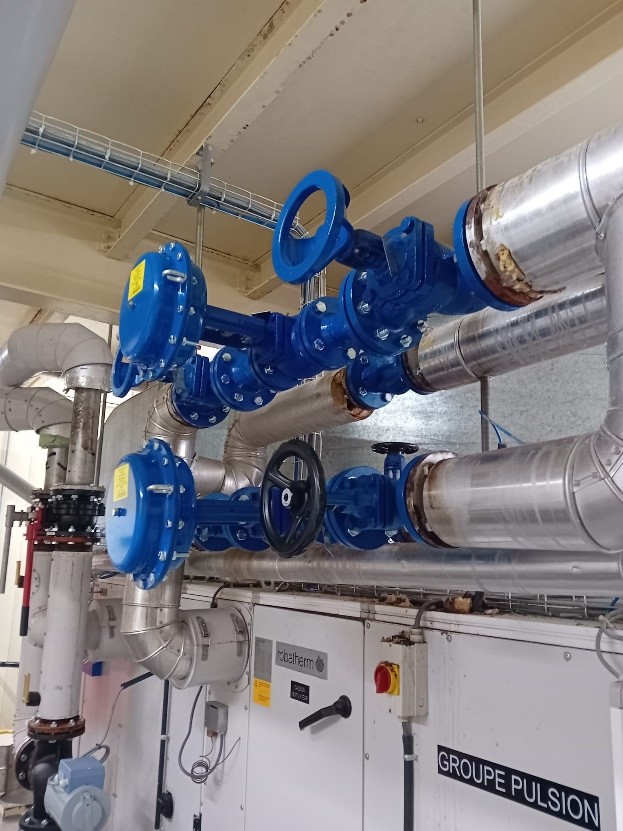
A manual valve is a mechanical device used to open, close or manually adjust the flow of a fluid (liquid, gas or steam) in a pipe. Unlike automatic and motorised valves, it is operated by hand, usually with a handle, a handwheel or a lever.
Role of a manual valve
- Stopping or allowing the flow of a fluid (isolation function)
- Manually regulating the flow in some simple cases
- Securing an installation (closing for maintenance or in an emergency)


Types
Common types of manual valves
Ball valve
Quick opening and closing, widely used for its tightness.
Butterfly valve
Light and compact, often used for large diameters.
Globe valve
Allows finer flow control.
Knife gate valve
Suited to fluids with solids or pastes.
Gate valve
Wedge gate valve: widely used in water networks.
Can’t find your type of valve?
Advantages
- Simple operation
- Low cost
- Mechanical reliability
- Requires little maintenance
Disadvantages
- Not suited to automation
- Sometimes difficult to operate on large diameters or under high pressure
Contact
A manual valve to restore?
Our team is available on +32 4 380 59 83 or at info@pkiindustries.be.