

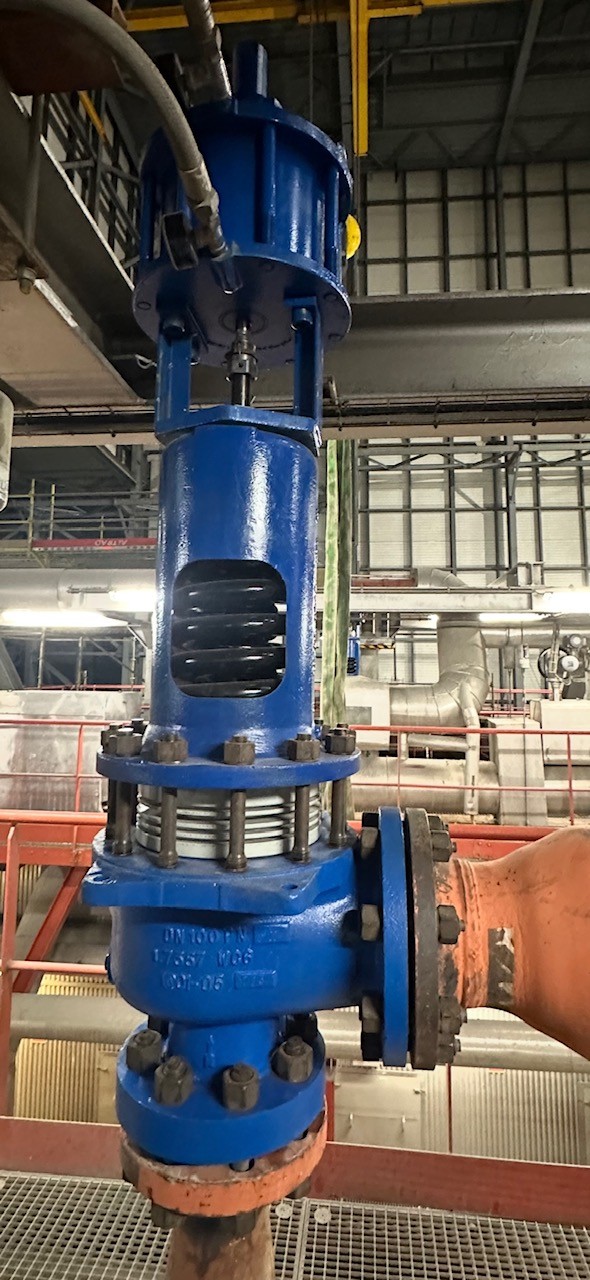
Definition
What is a safety valve?
A safety valve is an essential protective device designed to automatically release excess pressure in a system, to prevent any risk of damage, explosion or accident.
Its main role
Protecting equipment and people by releasing pressure as soon as it exceeds a defined limit.


Operation
How does it work?
01
In normal operation
It remains closed during normal operation.
02
In case of overpressure
If the pressure exceeds the safety threshold, the valve opens automatically to release part of the fluid (gas, steam or liquid), thereby reducing the pressure.
03
Back to normal
Once the pressure has returned to an acceptable level, the valve closes again.
Applications
Typical applications
- Industrial boilers (steam or hot water)
- Pressure vessels (compressed air, industrial gases)
- Petrochemical or chemical plants
- Steam networks
Importance
Why it is essential
Without a safety valve, overpressure can lead to:
- Destruction of the equipment
- A production shutdown
- A serious risk to human safety
Contact
Safety valves to overhaul or set?
Our team is available on +32 4 380 59 83 or at info@pkiindustries.be.